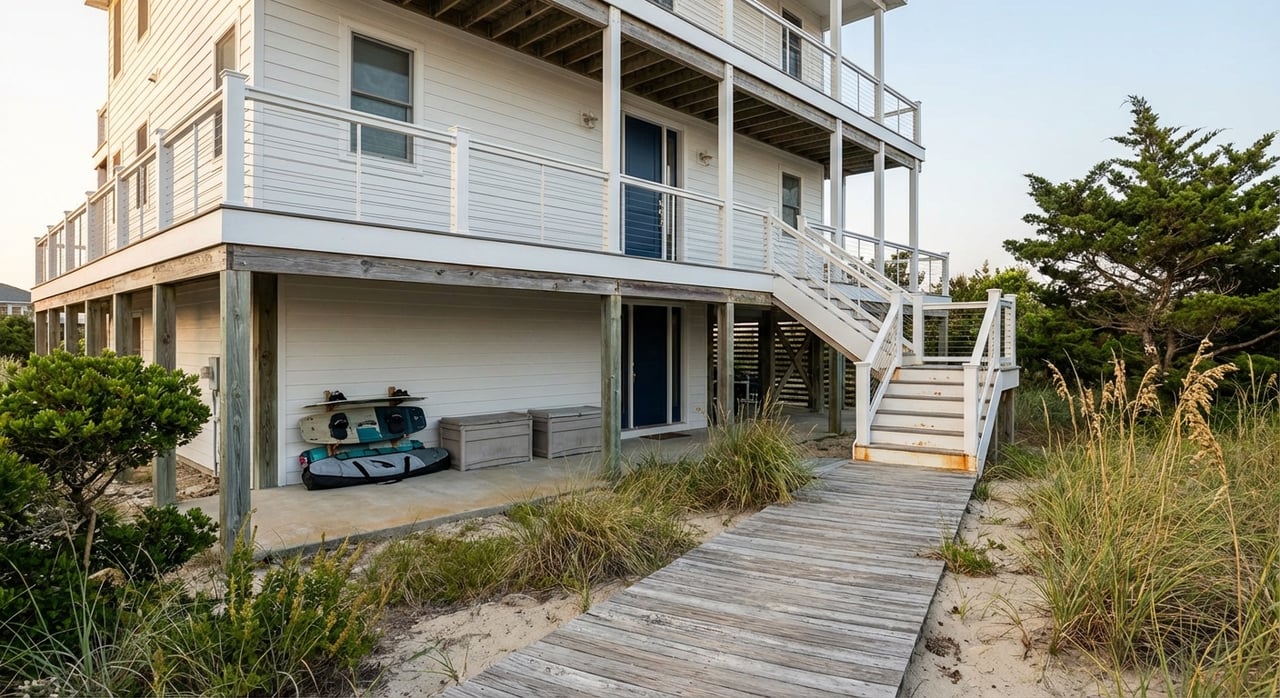
You can drive the Tri‑Villages in minutes, yet each stretch of Hatteras Island pulls a different kind of guest and delivers a different rental story. If you are weighing where to buy for a Waves‑area vacation rental, understanding how location shapes demand, seasonality, and risk is the edge you need. In this guide, you will learn how Waves, Rodanthe, and Salvo compare, what types of homes rent best in each, how county‑level data signals peak revenue weeks, and what to check before you write an offer. Let’s dive in.
Quick read: how the Tri‑Villages differ
- Waves is the watersports anchor with soundside infrastructure that attracts kiteboarders, windsurfers, and students looking for lessons and gear. That niche creates steady demand beyond summer weeks. Local guides highlight Waves’ kite and wind scene and the village’s watersports identity is widely recognized.
- Rodanthe leans surf and landmark traffic. The Rodanthe Pier, nearby surf breaks, and the village’s name recognition draw surfers, anglers, and beach‑first families. Overviews of the area point to its classic ocean access and pier appeal.
- Salvo reads the quietest and most residential of the three, with calm sound access and the Salvo Day Use Area that works well for kayaks, paddleboards, and gear launches. Many renters here want low‑key sunsets and family time.
All three sit along NC‑12, but small shifts in vantage and access change how guests find and use your home.
Who rents where and why
Waves: active‑sport and hybrid families
Watersports operators and lesson centers around Waves help attract students, experienced riders, and families who want easy access to both the sound and ocean. Event weeks and camps help fill shoulder seasons. Regional watersports pages note that competitions and instruction in the area support this draw.
What that means for you: expect a mix of week‑long family stays in summer and shorter, gear‑heavy bookings tied to clinics or events in spring and fall.
Rodanthe: surf breaks and pier appeal
Rodanthe’s identity centers on ocean access, surf breaks, and the pier. Visitors who prioritize wave conditions, fishing, and oceanfront views often choose here. Local overviews position Rodanthe as a surf‑friendly base with classic OBX beach exposure.
What that means for you: oceanfront or near‑ocean properties can command strong summer ADRs when paired with simple beach access and views.
Salvo: soundside calm and repeat families
Salvo is known for a quieter, residential feel with attractive soundfront parcels and family‑friendly launches. Renters come for calm water, sunsets, and a slower pace.
What that means for you: market to multi‑generational groups and repeat families who value privacy and practical amenities over nightlife or high‑traffic beaches.
What to buy and outfit by village
Waves: gear‑ready and sound‑smart
- Prioritize soundfront or sound‑view homes, or places within a short drive of lesson centers.
- Offer secure gear storage, outdoor rinsing, and trailer‑friendly parking.
- Ensure reliable high‑speed internet for remote workdays between sessions.
- If you are close to watersports hubs, highlight walk or quick‑drive convenience in your listing copy.
Why it works: you align the property with a proven niche that books early and returns for instruction blocks and events.
Rodanthe: oceanfront access and views
- Oceanfront or near‑ocean locations with dune walkovers tend to capture top summer pricing.
- Simple, durable finishes and storm‑smart features are essential.
- Clear guest guidance on surf conditions and safety is a must, since lifeguard coverage can be limited in spots.
Why it works: you monetize what these guests value most, which is surf proximity and sightlines.
Salvo: soundfront retreats and family focus
- Look for soundfront homes with docks or easy launch areas.
- Emphasize parking, play space, and quiet decks for sunset watching.
- Market multi‑week stays and repeat‑guest discounts to build loyalty.
Why it works: you reduce turnover stress and attract families who plan ahead and return.
Seasonality and events: what drives rates
Dare County is one of North Carolina’s top visitor markets, with tourism spending reported near $2.1B in recent reporting. That scale shows why summer demand is intense, yet it also concentrates a large share of income into peak weeks. State reporting highlights the Outer Banks among the state’s visitor‑spend leaders, which aligns with strong rental performance during high season. See the state’s update on record tourism spending for context at EDPNC.
County occupancy‑tax collections confirm the pattern. Dare County’s monthly series shows strong summer peaks, with July consistently the single largest month for collections. Review the county’s occupancy‑tax collections table to understand month‑by‑month seasonality.
In Waves, events and instruction weeks help fill shoulders. Watersports competitions, including well‑known kite and windsurf gatherings typically held in late spring or early summer, create pricing windows for investors. Learn more about the local kite scene through OuterBanks.com’s guide.
How to act on the data:
- Use shorter minimum stays and premium pricing during event weeks.
- Anchor your underwriting to county collections, then validate with 24 to 36 months of the property’s booking history.
- Plan for high ADRs and occupancy in June through August, with targeted shoulder spikes for sports events and good wind periods.
Risks, rules, and underwriting basics
The Outer Banks rewards smart preparation. Before you buy, confirm your tax and legal obligations, and model storm and access risk.
Taxes and registration
- The tri‑villages sit in unincorporated Hatteras Island. As a short‑term rental, you must collect and remit the county’s 6 percent occupancy tax on transient stays. Review Dare County’s occupancy‑tax guidance and filing steps.
- Some incorporated towns in Dare County require STR registration. Nags Head is one example, which shows how rules can vary by jurisdiction. See the Nags Head STR registration page for a model process and confirm whether your target address is in town or county limits.
State law
- North Carolina’s Vacation Rental Act sets key duties for owners and agents, including trust‑account handling and disclosure requirements. Review Chapter 42A at the NC General Assembly site and confirm your manager’s compliance.
Flood, storm, and access risk
- Pull FEMA flood maps and obtain an elevation certificate. Dare County publishes resources and participates in the NFIP and CRS. Start with the county’s flood‑map portal and guidance.
- Cape Hatteras is a high‑vulnerability coast. Long‑term erosion, storm surge, and overwash are documented in federal and state studies. For background on coastal vulnerability work used in planning, see Science.gov’s topic index and NC Sea Grant’s overview.
- NC‑12 is the island’s spine. Closures during major overwash events can disrupt guest access and revenue. Environmental impact statements have quantified potential economic losses from prolonged breaches in peak season. Review one of the FEIS summaries on NC‑12 at this archived chapter and plan contingency scenarios.
Insurance and mitigation
- Expect higher wind and flood premiums for oceanfront and low‑elevation soundfront homes. Flood coverage is typically required for federally backed mortgages inside FEMA special flood hazard areas. For policy mechanics and recent program changes, see the CRS overview on Congress.gov.
- Ask your agent about any active elevation or mitigation grant programs. The county has pursued FEMA‑funded elevations for flood‑prone homes in the past.
Location decision framework
Use your rental goal to choose a spot and amenity package.
Goal: Max summer ADR and oceanfront value
- Best fit: Oceanfront in Rodanthe or prime oceanfront in Waves.
- Why: Highest summer demand and view premiums.
- Action: Budget for stronger storm underwriting, dune access maintenance, and a healthy insurance reserve.
Goal: Target watersports niche and shoulder‑season demand
- Best fit: Waves, soundfront or near lesson centers.
- Why: Events and instruction add spring and fall bookings.
- Action: Invest in gear storage, outdoor rinsing, and flexible minimum‑stay settings during event weeks.
Goal: Lower turnover and repeat family renters
- Best fit: Salvo, especially soundfront retreats.
- Why: Quieter setting and calm water amenities attract planners and repeat guests.
- Action: Promote safety features, multi‑week pricing, and sunset or dock access.
Amenities that lift occupancy and ADR across all three:
- Private pool and hot tub.
- Three or more bathrooms for group comfort.
- Easy ocean access or a private boardwalk.
- Dedicated gear storage or a dock for sound launches.
- Reliable Wi‑Fi and functional parking for multiple vehicles.
Due‑diligence checklist before you offer
- Request 24 to 36 months of booking calendars, gross rental income, and management fee statements. Cross‑check the seasonality you see against Dare County’s occupancy‑tax collections.
- Verify that occupancy‑tax filings and remittances match reported income.
- Pull FEMA maps and a current elevation certificate via the county’s flood‑map resources.
- Get written quotes for wind, hail, and flood insurance before due diligence ends.
- Review the rental agreement for compliance with the North Carolina Vacation Rental Act.
- Ask for any NC‑12 closure history that affected the property’s bookings and review summaries from the NC‑12 FEIS materials.
- If you are considering a property in an incorporated town, confirm whether short‑term rental registration is required by checking a model like Nags Head’s STR page and then verifying the rules for the exact jurisdiction.
Final thoughts and local help
The right Tri‑Village location depends on your guest, not just your address. Rodanthe rewards pure ocean‑first demand. Waves gives you a watersports niche that stretches your earning season. Salvo offers a calmer rhythm that can lower turnover stress and foster loyal, multi‑year guests. Pair that strategy with county‑level seasonality data, a disciplined insurance and access plan, and a property that fits your target renter.
If you want a local, senior‑led team to help you match goals to the right street, lot, and home features, reach out to Brad Beacham. Our group combines native OBX expertise with a relationship‑first approach to acquisition, rental positioning, and resale across Hatteras Island and the wider Outer Banks.
FAQs
What is the main difference among Waves, Rodanthe, and Salvo for rentals?
- Waves centers on watersports and shoulder‑season events, Rodanthe skews oceanfront and surf demand, and Salvo offers quieter, sound‑oriented stays with a residential feel.
How strong is summer demand in Dare County for short‑term rentals?
- County occupancy‑tax collections show the strongest peaks in summer, with July consistently the top month for receipts, signaling high ADRs and occupancy in peak weeks.
What taxes apply if I run a Hatteras Island vacation rental?
- You must register, collect, and remit the county’s 6 percent occupancy tax on transient stays and file monthly returns with the Dare County tax office.
How do events affect bookings in Waves specifically?
- Watersports competitions and instruction weeks in late spring and early summer create shoulder‑season spikes; shorter minimum stays and premium event pricing can capture that demand.
What risks should I model for an oceanfront or soundfront property?
- Model flood, wind, and storm surge risk, plus potential NC‑12 access disruptions; obtain flood maps, an elevation certificate, and written insurance quotes before closing.
What documents should I request to validate income before I buy?
- Ask for 24 to 36 months of booking calendars, gross income, management fees, and occupancy‑tax filings, then compare the pattern to the county’s monthly collections table.