What draws you to a soundfront home in Salvo? For many buyers, it is the mix of open water views, calmer access to Pamlico Sound, and a quieter stretch of Hatteras Island life. If you are thinking about buying here, it helps to look beyond the view and understand the access, insurance, permitting, and ownership details that can shape your experience. Let’s dive in.
Why Salvo Soundfront Stands Out
Salvo has a distinct setting on Hatteras Island. It is the southernmost of the Tri-Villages, with direct access to Pamlico Sound and nearby drive-on beach access. Just south of town, an uninhabited 11.5-mile stretch of Cape Hatteras National Seashore helps give the area its quieter, more open feel.
For many buyers, that setting is the main appeal. The soundfront lifestyle here is less about being in the middle of busy retail activity and more about having space, water access, and a strong connection to the outdoors. If you want a coastal property that supports daily use on the water, Salvo offers a niche that feels very different from other parts of the Outer Banks.
Water Access Matters Most
A soundfront home in Salvo is often about how you will actually use the property. The National Park Service notes that Salvo Soundside Beach includes a sandy soundfront beach, parking, showers, and a canoe, kayak, and small boat launch. It also describes Pamlico Sound as gentler and warmer, which helps explain why the area appeals to kayakers, kiteboarders, windsurfers, and stand-up paddle boarders.
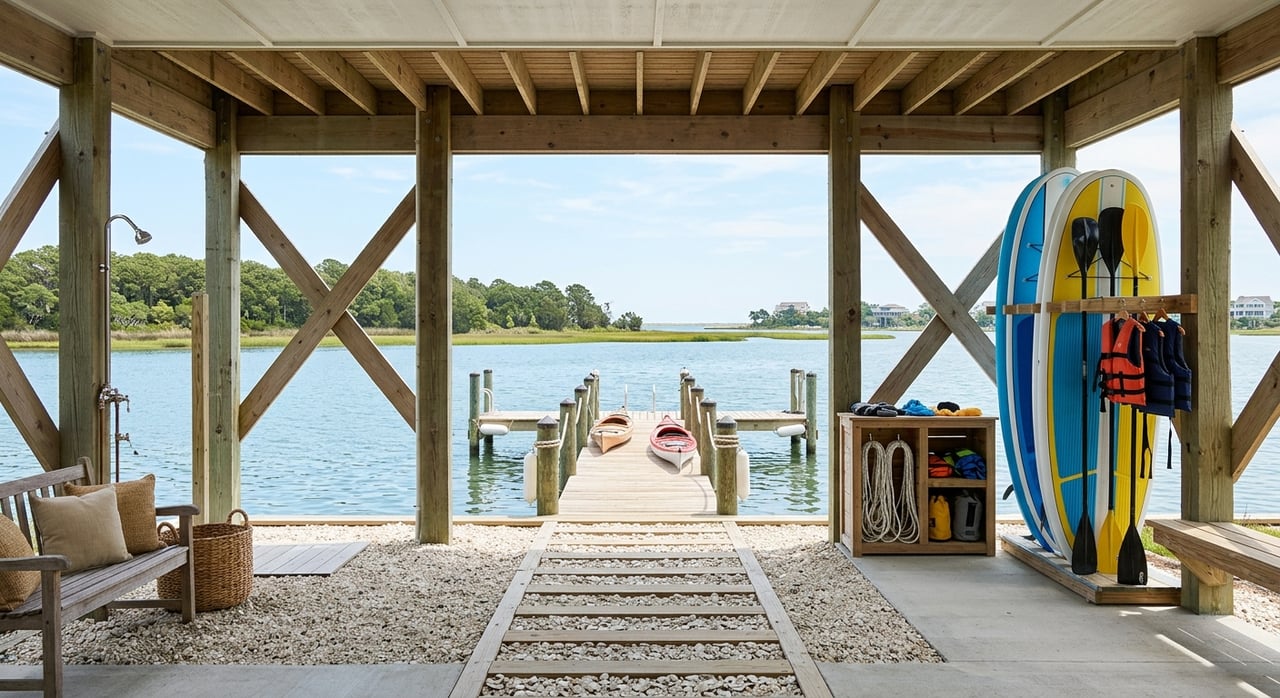
That matters when you compare one home to another. A beautiful view is great, but the real value may come from how easy it is to launch a board, store gear, rinse off equipment, or step outside and get on the water. If you are buying for personal use, guest use, or rental appeal, everyday usability should stay high on your list.
Features to Look For
When you tour soundfront homes in Salvo, pay close attention to practical features such as:
- Dock or pier condition
- Bulkhead, riprap, or other shoreline improvements
- Outdoor shower or rinse area
- Space for kayaks, paddle boards, or sails
- Trailer parking or easy loading access
- Storage for watersports gear
- A clear path from the house to the water
These details can make a major difference in how the home lives over time.
Check Shoreline Improvements Carefully
On a soundfront property, shoreline work is a big part of due diligence. North Carolina DEQ lists CAMA general permits for projects such as docks, piers, bulkheads, riprap, boat ramps, and excavation of canals, channels, basins, and ditches. DEQ also notes that some 2024 legislation changed when certain dock, pier, and walkway replacements may be exempt from CAMA permitting, though those exemptions come with conditions and do not remove other state or federal requirements. You can review that through the North Carolina DEQ permitting update.
In plain terms, do not assume every existing structure is fully documented or that future work will be simple. Ask whether shoreline improvements were permitted, whether records are available, and whether any repair or replacement plans could trigger new approvals. A soundfront home can be a wonderful asset, but coastal improvements need to be understood before closing.
Riparian Access Is a Separate Question
Owning waterfront land does not always answer every access question. North Carolina’s Dredge and Fill Law says it does not impair riparian ingress and egress to navigable waters, which makes water access rights an important issue to confirm independently.
That means you should verify more than just the lot lines. You will want to understand whether the property has usable riparian access and how that fits with your intended use. This is especially important if a dock, launch area, or other water access feature is central to why you are buying.
Septic and Water Source Deserve Attention
If you are buying an older soundfront home, a vacant lot, or a property you hope to expand, site work matters. Dare County states that its Environmental Health Department evaluates whether a lot can support a septic system, and the construction permit step requires proof of an approved water source. You can learn more through Dare County septic permitting information.
For buyers, this means septic suitability, system age, and water-source approval should not be afterthoughts. On coastal properties, those items can affect renovation plans, future additions, and overall use of the property. If you are thinking about rebuilding, expanding, or improving the home, this should be part of your early review.
Flood Zones Affect More Than Insurance
Every Salvo soundfront purchase should include address-level flood review. FEMA says the Flood Map Service Center is the official public source for flood hazard information, and flood maps can change over time. Dare County also provides a local flood-zone viewer that compares prior maps with current effective maps.
Flood designation matters because it can influence insurance requirements, financing, and your long-term ownership costs. It can also affect how you think about future improvements or repairs. Two homes with similar views can carry very different insurance and lending implications.
Flood Insurance Is Separate
Flood insurance should be discussed on its own. The North Carolina Department of Insurance says standard homeowners policies do not cover flood damage and recommends considering flood insurance if you live near the coast. FEMA also notes that federally regulated or supervised lenders require flood insurance for buildings in a Special Flood Hazard Area, and NFIP guidance states that most policies have a 30-day waiting period before coverage becomes effective. You can review North Carolina flood insurance guidance for the basics.
This is one reason buyers should start the insurance conversation early. Waiting until the final days before closing can create stress, especially if lender requirements or policy timing become an issue.
Wind and Hail Coverage Can Be Separate
Another key point for coastal buyers is windstorm and hail coverage. The North Carolina Department of Insurance says this coverage may be excluded from a primary residential policy depending on the insurer. Some owners purchase separate coverage through the North Carolina Insurance Underwriting Association, also known as the Coastal Property Insurance Pool. More details are available in the state’s windstorm and hail coverage overview.
For a soundfront home in Salvo, this can shape your total cost of ownership in a meaningful way. Ask whether wind and hail are included, whether they are written separately, and how deductibles are structured.
Talk to Insurance and Lending Pros Early
Because flood zone, lender requirements, wind coverage, and deductible structures are all property-specific, you should get quotes and guidance from insurance and lending professionals before closing. This is especially important on Hatteras Island, where coastal exposure and flood mapping are central parts of the ownership picture.
A strong local buying strategy is not just finding the right home. It is making sure the property works financially, logistically, and practically for the way you want to own it.
Understand Day-to-Day Salvo Living
Salvo offers a low-key coastal setting, but it is not a dense retail area. According to the Outer Banks tourism authority, the village has a few tackle shops and small grocers, while a full-service grocery store is a short drive away in Avon or north of Whalebone Junction.
For many buyers, that is part of the charm. Still, if you are purchasing a second home, relocating, or planning around guests, it helps to understand what daily convenience looks like. A quieter lifestyle can be a major plus, but it usually comes with a little more planning.
Road Access Is Part of Ownership
Travel logistics matter on Hatteras Island. NCDOT says N.C. 12 is the only roadway link between Hatteras Island and the mainland, and a planning study notes that the road is routinely inundated by storm tide from ocean overwash or sound-side flooding. This is outlined in NCDOT information on N.C. 12 conditions.
For buyers, this is a real lifestyle and planning factor. You should think about storm interruptions, travel timing, evacuation planning, and how access issues may affect your personal use or rental calendar. It does not mean you should avoid buying, but it does mean you should buy with clear expectations.
Rental Appeal Depends on Function
If you are considering rental income, Salvo’s strongest draw is often its appeal to watersports-minded guests. Based on the recreation profile described by the National Park Service, the area is especially attractive for kayaking, kiteboarding, windsurfing, and stand-up paddle boarding because of its sound access and public launch amenities.
That points buyers toward features that support easy use. Homes with practical storage, outdoor showers, durable lower-level areas, dock access, and trailer-friendly layouts may be more appealing to that type of guest. In Salvo, rental value may be tied as much to functionality as it is to the view itself.
A Soundfront Home Is a Specialized Asset
A Salvo soundfront home can be an incredible fit if you want a property built around water access, open views, and a quieter Hatteras Island lifestyle. At the same time, it is a specialized coastal asset shaped by permitting, septic considerations, flood exposure, wind coverage, and road access realities.
That is why local guidance matters. When you work with someone who understands the micro-markets of the Outer Banks, you can evaluate the full picture before you fall in love with the setting. If you are thinking about buying a soundfront home in Salvo, connect with Brad Beacham for thoughtful, locally informed guidance tailored to your goals.
FAQs
What makes a Salvo soundfront home different from other Outer Banks properties?
- Salvo soundfront homes stand out for their Pamlico Sound access, quieter setting, and strong appeal for buyers who want kayaking, kiteboarding, windsurfing, paddle boarding, and other water-focused use.
What should you inspect at a soundfront property in Salvo?
- You should closely review dock or pier condition, shoreline improvements, storage space, rinse areas, trailer parking, and whether the property has practical and usable water access.
Do Salvo soundfront homes need flood insurance?
- Flood insurance depends on the property’s flood designation and lender requirements, but standard homeowners insurance does not cover flood damage, so buyers should verify flood maps and discuss coverage early.
Can wind and hail coverage be separate for a home in Salvo?
- Yes, according to the North Carolina Department of Insurance, windstorm and hail coverage may be excluded from a main homeowners policy and sometimes must be purchased separately.
Why do septic and water-source reviews matter when buying in Salvo?
- Dare County requires septic suitability review and proof of an approved water source for construction permitting, so these items can affect older homes, vacant lots, and future expansion plans.
Is Salvo a good fit for buyers seeking rental potential?
- Salvo may appeal to buyers seeking rental potential, especially if the home is designed for watersports use with features like gear storage, outdoor showers, dock access, and easy loading areas.